A California sea lion at the Marine Mammal Center in the Marin Headlands on Wednesday Oct. 17, 2018. (James Cacciatore/Marin Independent Journal)
Dr. Alissa Deming of the Pacific Marine Mammal Center in Laguna Beach, Calif., performs an ultrasound exam on California sea lion. Sea lions can be used as a model for studying virally induced diseases as well as how cancer spreads and metastasizes. (Provided by the Pacific Marine Mammal Center)
Two young California sea lions pause after being released by the Marine Mammal Center on a beach at Chimney Rock in West Marin near Inverness on Thursday, May 10, 2018. (Alan Dep/Marin Independent Journal)
Researchers say they have solved a three-decade mystery as to why so many California sea lions brought to the Marine Mammal Center in the Marin Headlands are dying of an aggressive cancer.
The findings recently published in the scientific journal Animals concluded that the sexually transmitted herpes virus was causing the high rates of cancer among female sea lions. About one of four dead sea lions examined by the Marine Mammal Center was found to have died of the cancer known as sea lion urogenital carcinoma, which aggressively spreads through the affected sea lion.
Dr. Alissa Deming, director of clinical medicine at the Laguna Beach-based Pacific Marine Mammal Center and the study’s lead author, said the findings could help researchers better understand how viruses trigger cancer development in other species including humans.
“Now that we know that this is a virally-induced cancer, we can use them as a model for studying that in all species,” Deming said on Tuesday.
Many cancers are triggered by viral infections in combination with other factors, Deming said. The human papillomavirus, known as HPV, is known to cause cervical cancer in women, especially in combination with other factors such as a history of smoking.
Researchers with the two mammal centers found in a study published earlier this year that contaminants such as the pesticides DDT and PCB were contributing factors in sea lions developing this cancer, especially in southern California. Now researchers plan to study how the virus and these other chemicals work to trigger cancers in some sea lions but not others.
Researchers at the Marine Mammal Center first diagnosed the cancer in 1979, but did not know the underlying causes and why it so acutely affected California sea lions. Between 18% and 23% of all sea lions admitted to the center’s hospital at the Marin Headlands between 2002 and 2017 died of the cancer, according to the study.
Study coauthor Dr. Pádraig Duignan, director of pathology at the Marine Mammal Center, said the “cancer begins in the sea lion’s genital tract and aggressively spreads throughout the sea lion’s body, resulting in death, often from kidney failure.”
Often the center’s hospital only receives stranded sea lions that are already at the end stages of the cancer. At that point, these sea lions are like “swimming tumors,” Deming said.
“It’s quite incredible to see how much it’s taken over these animals’ bodies,” Deming said. “Their lungs just have no normal lung tissue left and their livers are just riddled with tumors.”
What’s also uncommon is the high rates of the cancer among younger sea lions of about 5 to 7 years old when they begin breeding. For other animals, cancers typically develop when the organism ages and its immune system becomes compromised.
“It’s kind of an abnormal thing and has pretty serious population-level impact if you’re taking out a younger, just-starting-to-reproduce population,” Deming said.
The researchers tested for the herpes virus known as OtHV1 in tissues from 95 sea lions that had developed the cancer and 163 sea lions without the cancer. All of the cancer-afflicted animals had the virus, while only 36% of the healthy animals did.
Additionally, the cancerous sea lions had “exceptionally high” levels of the virus that were highly active in genital tumors, according to the study. In contrast, healthy sea lions showed no detectable levels of viral gene expression, which suggested the virus was dormant, according to the study.
Although the cancer was first recognized in the late 1970s, it wasn’t until the 1990s when Marine Mammal Center researchers such as Frances Gulland began collecting more data on these samples. The combination of nearly three decades of sea lion tissue samples along with the advancement of DNA sequencing technology, especially in this past decade, allowed for the discovery of the link between herpes and the sea lion deaths, Deming said.
While the findings likely won’t allow veterinarians at the marine mammal centers to cure infected sea lions, they could hold the secret on how to block the aggressive spread of the cancer in other animals, Deming said.
“It really gives us an opportunity to learn from a bad situation that we really can’t do anything about to help future animals and potentially even come up with some treatments of animals in managed care like aquariums that develop this disease,” she said.
Samples are taken and brought back to the surface where they are analyzed for months in a lab.
PHOENIX — Researchers at Arizona State University have developed a new method that could drastically improve the way we explore space, and it is all happening some 3,500 meters under the sea.
Researchers Dr. Everett Shock and Dr. Vincent Milesi developed a method to interpret data received during deep-sea explorations in a short amount of time to allow researchers to make informed decisions on the next steps of a remote research project in just hours.
THE OLD WAY VS. THE NEW WAY
“Well, there was one thing that we did, especially from ASU, was we kind of turned the system on its head,” said Shock.
In traditional deep-sea explorations, especially when a remote-controlled vessel is used to reach depths of the ocean unhabitable by humans, data analysis is a long and complicated process.
Typically, an exploration is planned, samples are taken and brought back to the surface where they are analyzed for months in a lab. Decisions on where or what to explore next are then determined.
Taking part in a project sponsored by the Ocean Exploration Trust, a non-profit that supports the scientific explorations of the Earth’s oceans, Shock and Milesi used deep-sea exploration to put their method to the test.
“So, what we did was to do a huge number of calculations and models taking advantage of clever ways of doing computer programming, so that he had a whole bunch of predictions of possible chemical compositions that we might see,” said Shock.
These predictions of all the possibilities they might find on a mission, allowed them to line up the data they received and compare it to all the predictions. At that point, they could analyze the data much quicker. Like an autofill feature on text messaging, the predictions could point the researchers in the right direction instantly.
LOOKING BEYOND EARTH
“We built in this delay of a day in our communications, to simulate what it might be like to try to communicate with a team of astronauts exploring, say on Mars,” said Shock.
Shock and Milesi built in their delay in the communications with the ship Nautilus to simulate the delays scientists find in space exploration.
Unlike deep-sea exploration, space exploration comes with delays and gaps in communications. Sometimes researchers will encounter 30-minute delays while talking with astronauts over the radio, or have to wait for a small window of time when the entire data from a rover is sent across space from a previous day’s missions. Their new method of analyzing data would allow them to develop more nuanced plans of action for a space crew for the next day, as opposed to the next voyage.
“And that's where [the] ability to have already done a whole bunch of modeling and computation of what was going on in the system was so valuable,” said Shock. “Because we could try a bunch of things really rapidly. ‘Hey, does it work this way? Does it work that way?’”
ON THE HORIZON
With a plan in place to quickly analyze and react to data on a remote mission, NASA is planning on using Shock and Milesi’s method on its next probe mission to Jupiter.
“The Europa Clipper mission was approved several years ago, we've been working on it,” said Shock. “I'm involved in that project. The launch date is coming up in a couple of years.”
Europa, a frozen water moon of Jupiter, is a perfect environment for Shock’s and Milesi’s method, and the underwater exploration of the Gorda Ridge was the perfect location.
It’s thought that Europa’s surface, which is covered by ice, sits over a giant ocean. As Europa Clipper passes by, Shock and Milesi will be able to analyze the data and help NASA get the most out of their mission.
“I think it's a real benefit to try to do things differently than you've been doing them,” said Shock. “It causes you to have all sorts of new ideas about how things can be done.”
Turkish drilling vessel Kanuni departs on her maiden voyage to the Black Sea on November 13, 2020. (REUTERS/Yoruk Isik)
The Baltic Sea has been perceived in recent years as the maritime front line in rising tensions between the West and Russia. This has prompted NATO to develop a multi-level approach, which has led to a substantial improvement in regional security.
In contrast, the Black Sea has received much less attention. This is despite Russian military aggression in littoral would-be NATO states Ukraine and Georgia, along with construction of the TurkStream pipeline, which is designed to control the flow of Russian gas to Eastern Europe and Turkey via the Black Sea.
A recent CEPA strategy paper noted that the Black Sea region was not only a frontier between the West and Russia, but also the meeting point of four great forces: democracy in the West, Russian military aggression to the north, growing Chinese financial influence to the east, and Middle Eastern instability in the south.
To fend off rising Chinese inroads and Russian aggression, it said, the West and NATO would have to produce a multi-layered strategy. This would involve helping littoral states build strong economies while encouraging collaboration among them.
Such a vision would consolidate security on NATO’s southeastern flank. It would bring alliance members Bulgaria, Romania and Turkey closer together with NATO’s strongest partners, Georgia and Ukraine.
One element that could underpin these objectives would be the development of Black Sea gas reserves which are being explored in the offshore zones of each littoral state. These reserves could become the linchpin of an integrated regional economy.
Subscribe for the latest from UkraineAlert
UkraineAlert is a comprehensive online publication that provides regular news and analysis on developments in Ukraine’s politics, economy, civil society, and culture.
The exact volumes of gas currently lying deep underneath the Black Sea are not yet known. Rough estimates predict that the Ukrainian shelf may contain more than two trillion cubic meters of gas. The exact figure is yet to be determined since two-thirds of the country’s maritime area passed to de facto Russian control following Moscow’s illegal annexation of Crimea in 2014. Ukraine’s state energy company Naftogaz is preparing to explore 32 remaining blocks.
Meanwhile, Turkey made international headlines in 2020 when it said reserves at its offshore Tuna-1 exploration zone may be as high as 405 billion cubic meters. Further reserves could be discovered in adjacent blocks.
To the west, Romania is thought to hold anything between 150-200 bcm of offshore reserves, being one of the most advanced littoral countries in terms of developing resources.
Bulgaria’s total reserves are unknown but just one of its as-yet unexplored fields, Khan Asparuh, is thought to contain 100 bcm. If this figure proves to be correct, these reserves alone could cover the country’s annual demand for more than 30 years.
To the east, Georgia may have overall recoverable gas resources of 266 billion cubic meters, although how much of these reserves lie in its Black Sea economic zone has yet to be determined.
In recent months, Romanian-Austrian integrated oil and gas company, OMV Petrom, which has been developing Romania’s Neptun Deep project together with US company ExxonMobil, has been seeking cooperation opportunities with neighboring countries.
In February 2021, it signed a memorandum of understanding with Naftogaz for joint gas exploration projects in Ukraine. Last summer, it increased its share in the Bulgarian Khan Asparuh project to 42.86% following the transfer of Spain Repsol’s 30% stake. The company also won a bid for exploration in Georgia’s offshore Block II.
However, more investors are needed to provide technology, financial support, and know-how to help littoral states develop an integrated strategy addressing shared challenges.
With the exception of Turkey, all littoral states have seen their maritime industries suffer a drop in competitiveness following the fall of communism. Ukraine, for example, was previously known for its “maritime maturity,” boasting a diversified maritime economy integrating river transportation, shipbuilding, and the oil and gas industry.
Following the collapse of the Soviet Union, Ukraine struggled to rebuild its navy, while Russia’s illegal annexation of Crimea meant the country not only lost substantial offshore reserves but also lost control over Naftogaz subsidiaries operating in the region along with billions of dollars in equipment.
Similar stories of industrial decline over the last three decades can be found in Romania, Bulgaria, and Georgia.
Meanwhile, Turkey’s Black Sea maritime zone has been historically undervalued as the country has viewed it as a border region adjacent to an area of conflicting military powers, namely NATO and the Warsaw Pact.
These countries do not only share historical difficulties. They also harbor similar aspirations to consolidate and diversify their economies. It is here that the development of natural gas resources could help revitalize energy-intensive industries as well as develop new sectors such as hydrogen production which align with global emission reduction targets.
As major regional agricultural and gas producers, Romania and Ukraine have historically had developed domestic fertilizer industries. However, declining output and higher gas prices have eroded their competitiveness in recent years. Ukrainian nitrogen fertilizer production has fallen dramatically since 2014. Romania’s decline has been even steeper, with production falling close to 19% year-on-year over the same period.
However, decreasing gas prices across the world in 2020 helped Ukraine ramp up its ammonia and urea output, which are critical to the production of nitrogen fertilizers. This made it possible to more than double urea exports from the Ukrainian Black Sea port of Yuzhny from 0.7 million metric tons in 2019 to 1.5 million tons to 2020, according to energy and petrochemicals news and price publisher ICIS.
Just like neighboring Romania, Bulgaria, and Turkey, Ukraine is looking to replace outdated coal-fired power plants, which cover around 40% of their total installed capacity, with cleaner fuels.
Natural gas produced in the Black Sea could help them to transition to renewable generation in a way that would not only guarantee reliable baseload capacity, but also access cost-effective means of generation. Moreover, the Black Sea region could become an integrated hub of innovation for the development of new technologies including hydrogen produced from natural gas and renewable forms of generation.
The Black Sea’s offshore wind potential is one of the highest in Europe, with Turkey’s conservatively estimated at 11 GW, Romania’s at 94 GW, and Ukraine’s at no less than 100 GW.
This abundance of natural gas and renewable energy potential could help Black Sea countries to set up hydrogen production clusters for supplies that would help decarbonize polluting industries such as steel, cement, glass, or car manufacturing as well as increase exports to Europe. Such a vision, however, could not be achieved without an integrated market approach where natural gas or hydrogen could flow freely from the Carpathians and the Balkans to the Urals.
The region already benefits from the Trans-Balkan pipeline, the historical transit corridor for Russian gas exports to the Balkans and Turkey via Ukraine, Moldova and Romania.
Due to the expiry of most legacy contracts held by Russia’s Gazprom with local transmission operators and the diversion of flows to the newly-built TurkStream, the Trans-Balkan pipeline, which has a capacity close to 30 billion cubic meters, is now free for third-party access.
For most of its route, the pipeline runs parallel to the Black Sea coast in Ukraine, Romania, Bulgaria, and Turkey, coming close to offshore blocks in their economic zones as well as the Mihail Kogalniceanu Military Base, NATO’s air base in southern Romania.
Meanwhile, Georgia could be integrated into the wider Black Sea gas region through the existing South Caucasus Pipeline, which has been expanded to carry Caspian gas to Turkey and southern Europe.
However, in order to take advantage of the opportunities offered by abundant gas reserves and the renewable energy potential of the Black Sea, littoral countries would have to consider building a regional energy market underpinned by shared rules.
Some littoral countries such as Ukraine have made progress in terms of opening up their markets, but even Kyiv has struggled to attract high-profile investors to help explore and produce its natural gas reserves.
In Romania, ExxonMobil is looking to exit the country, deterred by political and regulatory unpredictability, while Turkey’s currency instability and lack of reform in the gas sector have discouraged investors from entering the country in recent years.
An integrated and functional gas market would not only improve the region’s chances of attracting finance, but also give it greater collective weight among global gas producers. More importantly, it would minimize the risk of conflict arising among littoral states.
Under the United Nations Convention on the Law of the Sea (UNCLOS), exclusive economic zones (EEZ) extend 200 nautical miles beyond a sovereign country’s coastline. Since UNCLOS requires states to resolve conflicts equitably without giving further legal guidance, the potential for disputes is high in the Black Sea region since its deep sea is limited in surface.
In 2009, the International Court of Justice intervened in a conflict between Romania and Ukraine over the establishment of a single maritime boundary between the two.
Russia’s unlawful annexation of Crimea could complicate matters further as the peninsula’s EEZ overlaps with what remains of Ukraine’s, as well as with those of Romania and Turkey.
As explained by the authors of a recent article on Black Sea exploration, in the absence of shared rules, and with Turkey not being a signatory to the UNCLOS, what matters is who drills first.
This could leave room for conflict in the wider Black Sea region and create vulnerabilities for NATO and its partners, which Russia or China would be only too keen to exploit.
Dr. Aura Sabadus is a senior energy journalist who writes about Eastern Europe, Turkey, and Ukraine for Independent Commodity Intelligence Services (ICIS), a London-based global energy and petrochemicals news and market data provider. You can follow her on Twitter @ASabadus.
Further reading
The views expressed in UkraineAlert are solely those of the authors and do not necessarily reflect the views of the Atlantic Council, its staff, or its supporters.
UkraineAlert is a comprehensive online publication that provides regular news and analysis on developments in Ukraine’s politics, economy, civil society, and culture.
The Eurasia Center’s mission is to enhance transatlantic cooperation in promoting stability, democratic values and prosperity in Eurasia, from Eastern Europe and Turkey in the West to the Caucasus, Russia and Central Asia in the East.
Gas hydrates are a solid compound of gases and water that have an ice-like structure at low temperatures and high pressures. Compounds of methane and water, so-called methane hydrates, are found especially at many ocean margins -- also in the Black Sea. In addition to a possible use as an energy source, methane hydrate deposits are being investigated for their stability, as they can dissolve with changes in temperature and pressure. In addition to releases of methane, this can also have an impact on submarine slope stability.
During a six-week expedition with the German research vessel METEOR in autumn 2017, a team from MARUM and GEOMAR investigated a methane hydrate deposit in the deep-sea fan of the Danube in the western Black Sea. During the cruise, which was part of the joint project SUGAR III "Submarine Gas Hydrate Resources" jointly funded by the BMWi and BMBF, the gas hydrate deposits were drilled using the mobile seafloor drilling device MARUM-MeBo200. The results of the investigations, which have now been published in the international journal Earth and Planetary Science Letters, have provided the scientists with new insights into changes in the stability of gas hydrates.
"Based on data from previous expeditions, we selected two working areas where, on the one hand, methane hydrate and free methane gas coexist in the upper 50 to 150 metres of the hydrate stability zone and, on the other hand, a landslide and gas seeps were found directly at the edge of the gas hydrate stability zone," explains Prof. Dr. Gerhard Bohrmann, expedition leader from MARUM and co-author of the study. "For our investigations we used our drilling device MARUM-MeBo200 and broke all previous depth records with a maximum depth reached of almost 145 metres."
In addition to obtaining samples, the scientists were, for the first time, also able to carry out detailed in situ temperature measurements down to the base of the gas hydrate stability under the seabed. Previously, this baseline was determined using seismic methods, from which the so-called "bottom simulating reflector" (BSR) was obtained as an indicator of this base. "However, our work has now proven for the first time that the approach using the BSR does not work for the Black Sea," explains Dr. Michael Riedel from GEOMAR, lead author of the study. "From our point of view, the gas-hydrate stability boundary has already approached the warmer conditions in the subsurface, but the free methane gas, which is always found at this lower edge, has not yet managed to rise with it," Riedel continues. The reasons for this could be attributed to the low permeability of the sediments, which means the methane gas is still "stuck" down there and can only rise very, very slowly under its own power, according to the scientist.
"However, our new analyses of the seismic data have also shown that in a few places the methane gas can break through the BSR. There, a new BSR is just establishing itself over the 'old' reflector. This is new and has never been seen before," says Dr Matthias Haeckel, co-author of the study from GEOMAR. "Our interpretation is that the gas can rise in these places, as disturbances in the seabed here favour the flow of gas," Haeckel continues.
"In summary, we have found a very dynamic situation in this region, which also appears to be related with the development of the Black Sea since the last ice age," says Michael Riedel. After the last glacial maximum (LGM), the sea level rose (pressure increase), and when the global sea level rose above the threshold of the Bosporus, salty water from the Mediterranean Sea was able to propagate into the Black Sea. Before that, this ocean basin was basically a freshwater lake. In addition, global warming since the LGM has caused a temperature rise of the bottom water in the Black Sea. The combination of these three factors -- salinity, pressure and temperature -- had drastic effects on the methane hydrates, which decompose as a result of these effects. The current study exemplifies the complex feedbacks and time scales that induce climate changes in the marine environment and is therefore well suited to estimate the expected consequences of today's more rapid global warming -- especially on the Arctic gas hydrate deposits.
Cruise leader Gerhard Bohrmann summarizes: "At the end of the SUGAR-3 programme, the drilling campaign with MeBo200 in the Black Sea showed us once again very clearly how quickly the methane hydrate stability in the ocean deposits also changes with environmental fluctuations."
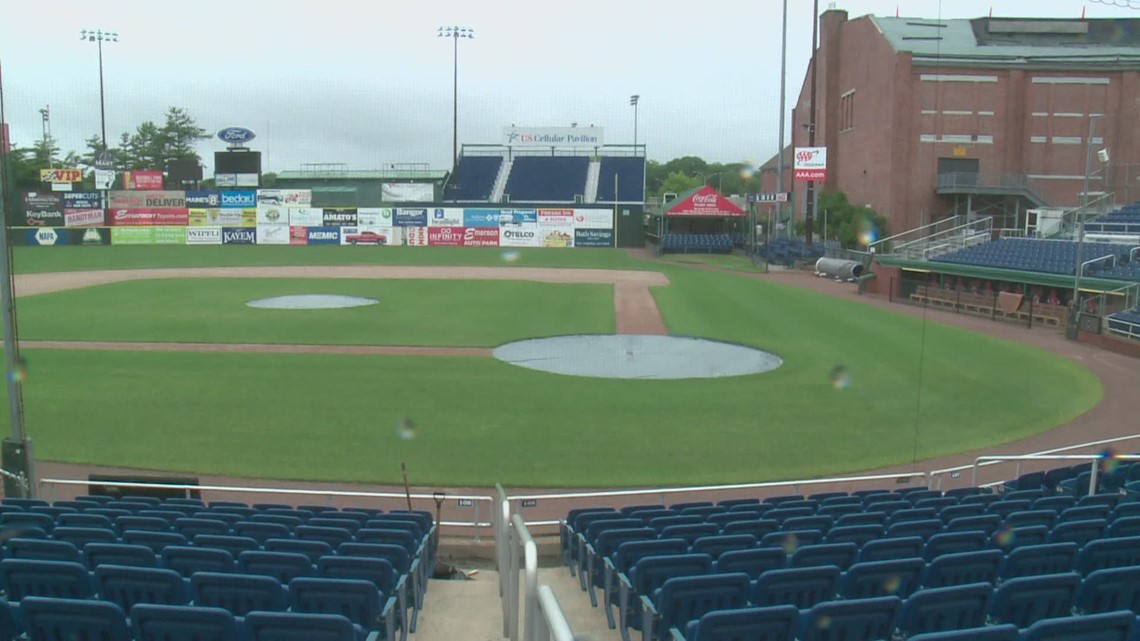
When Opening Day 2021 rolls around on May 4, it will mark 610 days since the Sea Dogs last played a game
PORTLAND, Maine — Editor's Note: The video above aired March 16, 2021.
Baseball returns to Hadlock Field starting May 4 and the Portland Sea Dogs have announced plans for how it will all work.
In a release Tuesday, Sea Dogs Vice President of Communications Chris Cameron said the team has worked with the state of Maine on a reopening plan that will put them at 28 percent capacity (2,087 fans) to start the season.
"This reduction in attendance will help us achieve our first priority: ensuring the safety of our employees, fans, and players," Cameron said in the release. "The ballpark will be set up with seating pods ranging from sets of two to eight seats; each will be at least six feet from the nearest pod."
Tickets
The Sea Dogs will play a 120-game schedule (60 home and 60 away) in 2021.
A big change compared to years past is tickets will be sold on a month-to-month basis beginning in April for May games, and continuing in May for June games, June for July games, and so on. Sea Dogs’ season ticket members will have a priority opportunity to purchase tickets before the team opens them up for sale to the public. The team will also release its promotional schedule in the same month-to-month format, allowing them to evaluate on a monthly basis what is safe for them to do.
Tickets for May games will go on sale to the general public at noon on Wednesday, April 14. Fans can either purchase tickets online at seadogs.com or call the Sea Dogs Ticket Office at 207-879-9500. Tickets will be sold in advance only. No on-site ticket sales will be permitted to start the season. Fans can visit seadogs.com for complete ticketing info, including answers to frequently asked questions.
The Sea Dogs are also offering fans who have held on to their 2020 tickets to once again request a refund. Fans may do so starting now through June 1, 2021, according to Cameron. Because the physical tickets are still active and subject to the redeeming policies listed above, the Sea Dogs do need the original tickets returned in order to process the refund.
Cameron said fans with tickets from 2020 have three options:
The amount that was paid for their 2020 tickets can be put towards the price of purchasing 2021 tickets.
They can choose to wait until the Sea Dogs return to a green status, where they will be able to exchange their tickets straight up for tickets of the same seating level or lower, based upon availability, per our normal operating procedures.
According to Cameron, ticket prices for the 2021 season are $19 for box seats, $18 for reserved seats, and $17 for grandstand seats. Sky Boxes are available to rent for up to eight people. Visit seadogs.com for more information or call the Sea Dogs Tickets Office at 207-879-9500.
"Last year was obviously a really difficult season for us and looking at this year, with the reduced capacity, we still think our expenses project at probably about 105 percent of where we were in 2019," Sea Dogs president and general manager Geoff Iacuessa told NEWS CENTER Maine. "And so for this year, being at only 28 percent capacity, we did have to raise ticket prices. But as we're able to open up more capacity we'll bring those ticket prices back down and certainly hopefully in 2022 when we're back to 100 percent capacity, we'll make sure the ticket prices go back down to where they typically are."
The Sea Dogs have also implemented a red/yellow/green ticket status moving forward. Below is an explanation of that program. The team is currently in a yellow status and Cameron said they anticipate that will be the case for much, if not all of 2021.
Green- when green is designated by Sea Dog officials, they will honor tickets via our normal operating procedures.
Yellow- when yellow is designated by Sea Dog officials, they will have reduced capacity available to fans. Specific instructions on how to purchase tickets will be provided. If you are applying a ticket purchased from a previous game to a game with a yellow designation only the amount paid for that ticket via the Sea Dogs ticket office is applicable towards the purchase price of the ticket to the yellow game. If a ticket was purchased via a reseller or via a donation only the purchase price paid when it was acquired from the Sea Dogs will be applied to the new ticket. Fans may also hold on to valid exchangeable tickets and exchange them once the Sea Dogs status returns to green.
Red- when red is designated by Sea Dog officials that means no fans are permitted into the ballpark due to health and safety concerns. If the Sea Dogs are under a red designation fans with tickets to games designated as red will have a specific timeframe to request a refund or may hold on to their tickets and apply the price paid towards a future game. Please note any exchange or refund request must be accompanied by the original tickets.
Every Wednesday throughout the season will be a bobblehead giveaway, according to Cameron. Here are some notable events planned for May:
On Wednesday, May 5, the first 500 fans will receive a Bobby Dalbec bobblehead with a home run counter, courtesy of Royal River Heat Pumps.
On Wednesday, May 26, the first 500 fans will receive a Darwinzon Hernandez bobblehead, courtesy of AAA.
The first fireworks show of the season will take place on Friday, May 28, followed by Superhero Day on Saturday, May 29.
The Sea Dogs will host a Breast Cancer Awareness Day and wear pink jerseys on Mother’s Day, Sunday, May 9.
For a complete list of May promotions, visit seadogs.com.
Safety protocols
Cameron said the following safety protocols will be in place during the 2021 season:
Face Masks
All fans will be required to be masked at all times, even while seated. The only exception will be when fans are in their seats and actively eating or drinking. Nobody will be permitted into the ballpark without a mask and anyone violating the mask rule in the ballpark will be removed.
Enhanced Cleaning & Sanitation
Enhanced daily cleaning procedures include frequent wipe downs of high-touch areas such as countertops, railings, doorknobs, and elevators, nightly disinfection of all interior areas, and frequent trash removal. Use of EPA-certified cleaning products with reduced dwell times will be used. Restrooms will be cleaned multiple times throughout each game. A cleaning porter will be assigned to each restroom to continuously clean all surfaces throughout the game. Hand Sanitizer stations will be located throughout the ballpark at all entrances, concourses, and restrooms.
Additional Entrances
The Sea Dogs have added additional entrances, for a total of four, to the ballpark for the 2021 season to help maintain physical distancing. Fans will be assigned specific entrances where they will enter and exit the ballpark from. The entrances will be marked on their ticket. Traffic flow will be marked with arrows with staff monitoring proper flow and distance between groups.
Pod Seating
Seats have been laid out throughout the ballpark in pods of 2-8 seats. Each pod is located at least six feet from the next pod. In addition, nowhere in the ballpark will one seating pod need to walk through another pod. The Sea Dogs have utilized the end of rows and only used the middle of rows when we aren’t using the end of those same rows. This will again minimize the chance of getting within six feet of any fan. Fans must buy the entire pod of seats. Any separating seat that is not part of a pod will be tied up so it can’t be used.
Mobile Food Ordering
All concessions sales will be in-seat only. Fans will be able to order via their phone or from one of our service staff. Food will then be delivered to the specific seat location. Sea Dogs’ souvenirs will also be available through mobile ordering with seat delivery.
Mobile & Touchless Ticketing
Fans are asked to use our mobile ticketing or print-at-home options. Tickets will be sent directly to your phone, where fans can enter the ballpark through our touchless ticket scanners, which will allow guests to enter the stadium faster and safer.
On-Field Personnel
Major League Baseball was able to successfully return to the field in 2020 thanks to a stringent testing and contact tracing program. Their plan in the return to play at the Minor League level will follow similar guidelines. Additionally, there will be a 12-foot buffer between the field and seats in areas where players commonly are (dugout, bullpen, on-deck circle) to help protect fans from players and vice versa.
All game-day staff will participate in online training prior to working their first shift. The training will review all safety measures being implemented at the ballpark. Employees will be required to self-evaluate for COVID symptoms prior to leaving for work. The Sea Dogs will use the embedded self-checker code available on the CDC website
A complete list of Hadlock Field COVID-19 health & safety protocols is available at seadogs.com.
Editor's Note: The video below aired March 26, 2020.
Since the 1950's, Naples Bay has lost 80% of its oyster reefs due to development, dredging, erosion from boat wakes, and decreasing water quality. Oyster restoration has been an ongoing effort in Naples Bay for over 10 years, and is accomplished by the placement of hard substrate on the bay bottom allowing juvenile oysters to recruit onto the reefs and eventually form new thriving reefs. The reefs will provide necessary vital habitat and food sources for many organisms, provide shoreline protection, increase coastal resiliency, as well as offer natural water filters which will help remove pollutants from the bay. They also expand recreational opportunities, as kayakers and anglers also utilize these areas.
The project was a collaboration between Sea & Shoreline and the City of Naples, all in an effort to support conservation and environmental enhancement.
"Oyster reefs are among the most threatened habitats in the world and need our protection," said Sea & Shoreline President Carter Henne. "They provide safe and sustainable environments for aquatic ecosystems to flourish. One adult oyster can filter up to 50 gallons of water a day, making them integral to the health of aquatic environments."
"As a coastal city, the City of Naples is always striving to improve water quality, restore impacted habitats, and maintain a healthy environment," said Katie Laakkonen, Interim Natural Resources Manager for The City of Naples. "Working with Sea & Shoreline to continue our oyster restoration efforts was a great experience. This site posed some challenges, including navigating a bridge with low clearance, and they adapted and innovated to get the work completed quickly and efficiently. Thanks to Sea & Shoreline, we have four newly created reefs that we look forward to watching grow in the future."
Since its inception in 2015, Sea & Shoreline's unparalleled experience with scientifically validated methods of aquatic restoration has proven successful across more than 150 environmental projects. The company continues to be the industry leader in rehabilitating threatened and corrupted aquatic environments. Other current and upcoming projects include dredging of muck and restoration of nearly 50 acres of seagrass habitat within the Kings Bay Restoration Project in Crystal River, Fla. and seagrass restorations in the Indian River Lagoon, the Caloosahatchee River, and the Homosassa River.
ABOUT SEA & SHORELINE Sea & Shoreline, LLC is a Florida-based aquatic restoration firm with two decades of experience restoring fresh and saltwater habitats to healthy and self-sustaining ecosystems. Sea & Shoreline has completed over 150 habitat restoration projects. Services include seagrass, oyster reef, coral reef, and propeller scar restorations, dredging, living shorelines, vegetated retaining walls, wetland plantings, berm stabilizations, and seagrass mitigation banking. For more information, please visit seaandshoreline.com, or follow us on social media LinkedIn, Facebook, Instagram, and YouTube.
SUEZ, Egypt — For six days, billions of dollars’ worth of international commerce sat paralyzed at either end of the Suez Canal, stalled thanks to a single giant container ship apparently knocked sideways by a powerful southerly wind.
The ship’s insurers and the canal authorities summoned the largest tugboats in the canal, then two even larger ones from further afield. They deployed diggers, front-end loaders and specialized dredgers to guzzle sand and mud from where the ship was lodged at both ends. They called in eight of the world’s most respected salvage experts from the Netherlands.
Day and night, with international pressure bearing down, the dredgers dredged and the tugboats tugged.
But not until the seventh day, after the confluence of the full moon and the sun conjured an unusually high tide, did the ship wriggle free with one last heave shortly after 3 p.m., allowing the first of the nearly 400 ships waiting to resume their journeys by Monday evening.
In the aftermath of one of the most consequential shipping accidents in history, the global supply chain industry will have a cascade of costly delays to contend with and much to assess: the size of container ships, the width of the Suez Canal, the wisdom of relying on just-in-time manufacturing to satisfy consumer demand around the world, and the role, if any, of human error.
But some things were out of anyone’s hands: If the wind and the tide might not be deemed acts of God by the insurance companies, they were a reminder that 21st-century commerce remains subject to random acts of nature.
“We’ve all seen the pictures and thought, ‘How on earth does that happen?’” said Emily Hannah Stausboll, a shipping analyst at BIMCO, a large international shipping association. “People in the industry are asking: Could it happen again? And if so, what do we do to avoid it happening for another week next time?”
How it happened will be the province of teams of inspectors and investigators who were set to begin work after the now-unstuck container ship, the Ever Given, motored under its own power Monday evening into the Great Bitter Lake, north of where it had been marooned since running aground amid a sandstorm last Tuesday morning.
Because the ship sails under a Panamanian flag, Panama will handle the investigation unless Egypt exercises its right to take over, though international pressure for a more thorough accounting could result in the United States National Transportation Safety Board stepping in, said Capt. John Konrad, who founded gCaptain.com, a maritime news site.
The Egyptians have already reached one conclusion, investigation or no.
“The Suez Canal is not at fault,” Lt. Gen. Osama Rabie, the head of the canal authority, said at a news conference on Monday night. “We have been harmed by the incident.”
Early on, the ship’s owner and operator blamed the wind, and maritime experts agreed that it had been a factor, perhaps the deciding one, as gusts pushed against the vertical wall of containers piled high atop the Ever Given as though against a sail. But General Rabie also suggested over the weekend that human or technical error may have come into play.
Under standard procedures, two Egyptian canal pilots would have boarded the ship before it entered the canal to help it navigate, experts said, though the ship’s captain would have retained final authority.
A reconstruction of the ship’s movements through the narrow section of the canal north of the port of Suez shows the Ever Given weaving back and forth from one side of the canal to the other almost as soon as it entered the channel, gathering speed until the 224,000-ton ship tops 13 knots, or about 15 miles per hour.
While it is not yet known what caused the Ever Given to start bouncing around the waterway, once it did, it succumbed to what is known in seafaring as the bank effect. That is a phenomenon in which the stern of a ship tends to swing toward one bank while its bow is pushed away from it, said Capt. Paul Foran, a maritime consultant who as a ship’s captain navigated the Suez Canal 18 times.
Captain Foran said that whoever was giving orders most likely tried to regain control over the ship by putting on speed. But that decision would have made matters worse, robbing the crew of its usual maneuvering tools. Bow thrusters that could push the bow left or right stop working at high speeds; the faster a ship goes, the lower the pressure beneath the hull, sinking the vessel dangerously low in the water.
“The faster you go, the less control you have,” he said, “and on a ship that size, once she gets out of control like that, it gets even more difficult to bring her under control.”
Investigators will use audio from the ship’s voice recorder and tracking data to piece together what combination of commands, and by whom, spelled ruin. But the result was clear: a ship the length of four football fields, wedged diagonally across a vital canal much narrower than four football fields, at a time when global shipping could ill afford further disruption after a year of havoc brought on by the pandemic.
As analysts warned that the Ever Given was blocking nearly $10 billion in consumer goods per day, the queue of waiting ships grew and the internet memes about the epic traffic jam piled up, the Suez Canal Authority and the ship’s owner and insurer scrambled tugboats and dredging equipment to the scene. By the day after the grounding, they had called in a highly regarded team of salvage experts from Smit Salvage, a Dutch company.
“The time pressure to complete this operation was evident and unprecedented,” Peter Berdowski, chief executive of Royal Boskalis Westminster, Smit’s parent company, said in a statement on Monday.
Working day and night as the tugboats pulled on the ship, the dredgers cleared away about 30,000 cubic meters of sand and mud from around the ship’s bow and stern, Boskalis said. There was also talk of removing containers from the ship to lighten it, an operation that would have required the extra headache of cranes on barges and possibly heavy-duty helicopters, but that proved unnecessary in the end.
Salvage crews kept a schedule largely dictated by the tides: working to make progress during the six hours it would take for the water to rise from low point to high.
A full moon on Sunday, culminating in a spring tide on Monday, gave the crews an especially promising 24-hour window to work in, with a few extra inches of water providing the assist. By Monday morning’s high tide, the ship was partially floating again, its stern freed.
Until then, the ship’s belly was sagging between its pinned-up bow and stern, causing analysts to worry that its hull would crack under the stress. When the stern swung free without incident, Captain Konrad said, it relieved the pressure on the center, raising the odds the ship would go on to float again without further complications.
“It’s miraculous they did it with no pollution and no injuries,” he said. “Everything kind of went to plan.”
But it was several more hours of anticipation and conflicting reports — the Dutch cautious, the Egyptians prematurely triumphant — before the ship was wrenched loose.
Horns blared in celebration as images emerged on social media of the ship, for so long diagonal, once again parallel with the canal.
Then even the Dutch exulted.
“We pulled it off!” Mr. Berdowski said.
President Abdel Fattah el-Sisi of Egypt celebrated the moment on Twitter, writing that “Egyptians have succeeded today in ending the crisis of the stuck ship in the Suez Canal despite the great complexities surrounding this situation in every aspect.”
Ms. Stausboll said that the authorities’ often overly rosy projections during the past week left many shipowners confused about what to believe. “A lot in the shipping community would wish there had been more clarity about what was going on in Egypt from the authorities,” she said. “It does harm your reputation.”
In the absence of a faster, cheaper option, however, the Suez Canal will remain a key artery for shippers, she said. And she pointed out that most ships, including large ones, have navigated the canal without incident in the past.
Shippers have, in any case, a more pressing concern: how to resolve the chain reaction of delays that may ripple out for weeks or months even after the Suez backlog clears, as it was beginning to do by Monday night.
The first ship to pass through the canal after the Ever Given got out of the way was the YM Wish, a 1,207-foot-long Hong Kong-flagged container ship that exited the canal at about 9:15 p.m.
If there is schadenfreude among ships, the YM Wish was perhaps not feeling it. VesselFinder.com reported the YM Wish ran aground in the Elbe River in Germany only six years ago. In its case, however, it took less than a day to float again.
Marc Santora contributed reporting from London, Nada Rashwan from Ismailia, Egypt, and Thomas Erdbrink from Amsterdam.







/cloudfront-us-east-2.images.arcpublishing.com/reuters/CZF6NULMVVMEXHOP7JK5BSPQUM.jpg)


Follow us on social media