Rechercher dans ce blog

Friday, April 2, 2021

Common Sense Health: Look to the sea for the mineral you need - The Independent

sea.indah.link

Isak Dinesen, author of the great book “Out of Africa,” wrote, “The cure for anything is sea water.” Human physiological and environmental circumstances today suggest merit in Dinesen’s advice to look to the sea for replenishment of key minerals. Magnesium is one of the most important minerals that too many people are neglecting, and a good place to source it — whether in diet or supplement — is from the sea.

Mineral deficiencies can sometimes cause minor problems. But they can also become lethal. Studies show that magnesium deficiency can range from 33% in young people to 60% in adults. This is the result of depletion in the amount of magnesium in the soil, as well as an increase in consumption of processed foods.

Magnesium is required for over 300 metabolic reactions in the body. It’s also nature’s dilator, helping to keep arteries open. This fights hypertension and spasm of coronary arteries. It also has a vital function in maintaining the heart’s normal rhythm. By making platelets more slippery, and therefore less susceptible to blood clotting, the chance of heart attack and stroke decreases.

Each beat of the heart depends on a complex electrical system that must be in sync for survival. Low blood magnesium tosses a monkey wrench into the process, causing an irregular heart rate (atrial fibrillation). Adding magnesium often restores the normal beat.

Today, a worldwide epidemic of diabetes creates a huge health problem. Studies show that since magnesium helps to control blood sugar, patients with low magnesium have an increased risk of this disease. And it is a critical mineral for maintaining bone health.

Since magnesium is involved in several hundred metabolic reactions, it’s not surprising that deficiency is associated with muscle weakness and twitching, sleep issues, fatigue and confusion.

But what makes sea-sourced magnesium the perfect magnesium? Sea water has an amazing similarity to the plasma portion of human blood. Although we cannot drink sea water because of its salt content, it does contain the entire range of minerals needed by humans.

This led an Irish company to develop a method of extracting these minerals from clean sea water to make the multi-mineral complex called Aquamin Mg that is low in sodium.

Then Aquamin Mg was compared to other forms of magnesium. For example, magnesium oxide is the most potent, but not well absorbed. Magnesium chloride is well absorbed but low in magnesium content. Aquamin Mg was found to offer the best of both. It was several times more soluble and absorb-able than magnesium oxide. And, since it contained 33 percent of elemental magnesium, more potent than the chloride version.

The recommended dietary allowance of magnesium varies, generally increasing with age. For typical adults, if supplementing, a good approach is to take 250 mg with food daily or whenever this key mineral is not being regularly consumed at recommended levels. Some people may benefit from higher doses, but the dose should be split up during the day. Magnesium can have a relaxing effect, so sounder sleep may result from a second dose at dinnertime.

Magnesium at these low doses rarely results in diarrhea. But it can help those who are constipated. If diarrhea does occur, decrease the dose.

Isak Dinesen was right. The sea helps to sustain life and is the source of minerals that can improve our health.

The Link Lonk


April 02, 2021 at 11:00AM
https://ift.tt/3fHxjWW

Common Sense Health: Look to the sea for the mineral you need - The Independent

https://ift.tt/2CoSmg4
Sea

Captain’s Log: Understanding Sea Conditions - Noozhawk

sea.indah.link

I am a seafaring captain at heart, and I love to dance with Ma Nature on her dance floor we call the sea. There are times when she beams a calm, sunny smile and dances slow and sensually. At other times, she hurtles herself across the dance floor, full of fury and wrath.

A possible funnel cloud forms over Santa Barbara Harbor.Click to view larger

A possible funnel cloud forms over Santa Barbara Harbor. (Courtesy photo)

It takes a lifetime to even begin to understand her moods, yet anyone who takes to the sea for their livelihood learns quickly.

On one of my recent day trips, the sea turned deadly in a heartbeat, and I was out there in the midst of it. I saw this change of her mood coming and got back to the safety of harbor just in time.

Let’s consider how to stay relatively safe. The forecasters had missed the call, yet again. I think they were paying way too much attention to their heavily-invested computer models, which too often disagree, leaving the forecasters in disarray.

Some serious advice: If you own a boat, or venture out on private boats (without the benefit of a licensed captain along), learn all you can about safe boating by taking a free public boating safety course from the U.S. Power Squadrons or the Coast Guard Auxiliary.

You will be glad you did, and you will certainly be a much safer boater than you were before the course.

Before I head off to sea, I spend about an hour on the computer checking weather-related resources to gain an understanding of the overall synoptic pattern, plus a feel for current trends in wind and seas.

Yes, I read the forecasts, especially the marine forecasts, yet with a skeptic eye because I know they are relying on computer models which are a work in progress.

I pay much closer attention to the observations from the NOAA buoys, such as the West Santa Barbara Channel Buoy and the East Santa Barbara Channel Buoy. I look at the trend in buoy observations over the past 24 hours.

Three of the things that worry me most are strong winds; tall, steep wind waves; and the possibility of thunderstorms. All can be deadly.

Here is something that really bugs me about the National Weather Service (NWS), and especially the marine weather part of that organization: You see, we boaters are a very visual bunch. We tend to make decisions based upon what we see when we scan the sea.

The presence or absence of whitecaps is a very influential decision factor. Many boaters will decide to stay ashore, or perhaps to head offshore in a different direction when they observe whitecaps. Yet, the term whitecaps is nearly never used by the National Weather Service.

There is something I want them to do, to help safeguard my charter passengers, as well as other boaters. I want them to use their satellites and websites to graphically display an image of our local seascape, with areas of whitecaps visible.

Then, I want that image updated hourly, because our vigorous weather changes frequently. I think this service will help keep people safe. NWS — are you up to the task?

— Capt. David Bacon operates WaveWalker Charters and is president of SOFTIN Inc., a nonprofit organization providing seafaring opportunities for those in need. Visit softininc.blogspot.com to learn more about the organization and how you can help. Click here to read previous columns. The opinions expressed are his own.

The Link Lonk


April 02, 2021 at 06:00AM
https://ift.tt/3cIkZDY

Captain’s Log: Understanding Sea Conditions - Noozhawk

https://ift.tt/2CoSmg4
Sea

Thursday, April 1, 2021

Why Sea Limited Stock Was Climbing Today - Motley Fool

sea.indah.link

What happened

Shares of Sea Limited (NYSE:SE) were climbing today, rising alongside broad gains in high-growth tech stocks as the 10-year treasury yield fell and investors responded favorably to details about President Joe Biden's $2 trillion infrastructure plan.

There was no specific news out on Sea Limited, but Cathie Wood's Ark Invest fund management company said it bought the stock yesterday, which may have encouraged other investors to follow suit.

As of 11:15 a.m. EDT, the stock was up 5.4% while the Nasdaq Composite had gained 1.5%.

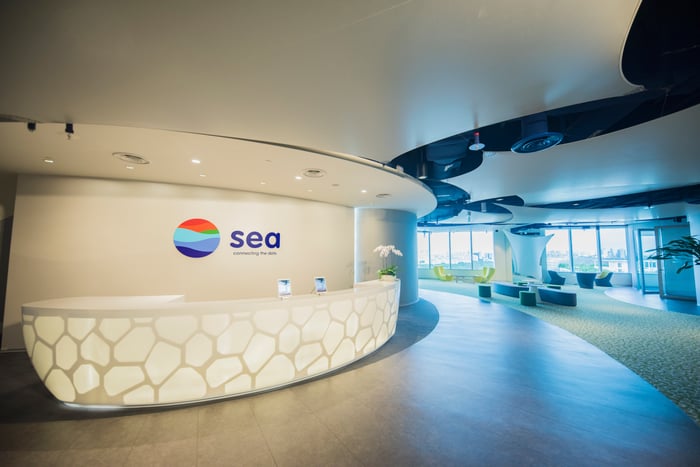
The reception desk at a Sea office

Image source: Sea Limited.

So what

Last night, Wood's ARK Fintech Innovation ETF (NYSEMKT:ARKF) said it had bought 20,091 shares of the stock, spending roughly $4.5 million based on Sea's closing price yesterday.

What was notable about the purchase was that it was for the company's fintech fund, even though Sea, a tech company based in Singapore, is primarily known for its digital gaming and e-commerce businesses.

Sea launched a digital payments business, SeaMoney, in 2014, which pairs well with its e-commerce business, Shopee, and the company also received a full digital bank license last December. Total payment volume on SeaMoney reached $7.8 billion last year, and it reached 23.2 million users in the fourth quarter, showing the business gaining scale.

Now what

Sea shares soared over 2020 as the company was well positioned to capitalize on the pandemic with exposure to digital gaming, e-commerce, and digital payments, getting multiple boosts from the stay-at-home effects of the crisis. This year, shares have been volatile as the stock is down 17% from its peak in February, but there are a lot of reasons to like Sea, including its fast-growing business in South America, showing it's capable of expanding beyond its home region of Southeast Asia.

Ark Invest's funds have gotten a lot of attention in recent months as its shares soared during the pandemic, and the company says it invests in the the most innovative and disruptive companies. It's not surprising to see Sea Limited in its portfolio.

This article represents the opinion of the writer, who may disagree with the “official” recommendation position of a Motley Fool premium advisory service. We’re motley! Questioning an investing thesis -- even one of our own -- helps us all think critically about investing and make decisions that help us become smarter, happier, and richer.

The Link Lonk


April 01, 2021 at 11:02PM
https://ift.tt/3ma9mZP

Why Sea Limited Stock Was Climbing Today - Motley Fool

https://ift.tt/2CoSmg4
Sea

Big winter snows in the North could be fueled by Arctic sea ice loss - National Geographic

sea.indah.link

In mid-February 2018, a strong high-pressure weather system slid over Scandinavia, bringing cold easterly winds that plunged Europe into a historic deep freeze. Arctic temperatures gripped the continent for weeks; snow fell as far south as Rome. In the British Isles, early March blizzards produced 25-foot snow drifts.

New research suggests that this astonishing cold wave, dubbed the Beast from the East, was supercharged with snow thanks in part to a dearth of sea ice in the Barents Sea, off the Arctic coasts of Norway and Russia. It points to a different and poorly studied way in which declining Arctic sea ice can impact the weather further south—distinct from the meandering jet stream phenomenon that has gotten so much press.

The study, published Thursday in Nature Geoscience, used isotopic matching, satellite data, and models to trace the origins of the snow that fell during the Beast from the East. The authors found that up to 88 percent of it, or 140 billion tons of snow, might have originated from evaporation at the surface of the Barents Sea, where levels of sea ice were unusually low that year.

Over the long term, the researchers say, dwindling Barents Sea ice in the winter could pack the atmosphere with moisture, fueling more extreme snowfall events in northern Europe—even if average yearly snowfall declines because of climate change.

“Given that winter temperatures are warming, increased snowfall might sound counterintuitive,” says lead author Hannah Bailey of the University of Oulu in Finland. “But nature is complex and what happens in the Arctic doesn’t stay in the Arctic.”   

More evaporation, more precipitation

The idea that declining winter ice cover can drive additional snowfall isn’t new. Ice acts like a lid over lakes and oceans, preventing the water underneath from evaporating into the atmosphere. Previous studies have tied decreased winter ice cover across the Great Lakes of North America to an uptick in “lake effect” snowfall, while other researchers have used models to explore the link between declining sea ice, increased evaporation, and snowfall, particularly off the coast of Siberia.

But few studies have attempted to directly connect Arctic sea ice losses, enhanced evaporation, and a specific extreme weather event, due to the logistical challenges of collecting samples in the Arctic. The Barents Sea, in particular, is a hotspot of winter sea ice loss, with maximum winter ice cover in March declining by about 50 percent since 1979. That makes it the ideal place to explore such linkages.

And the Beast from the East, which delivered historic snow totals across northern and western Europe between February and March of 2018, made a good test case for the hypothesis that ice losses in the Barents Sea might drive snowfall farther south.

As bitter cold air from Siberia surged eastward that year, a high-pressure ridge settled over northern Scandinavia and the Barents Sea, warming the ocean’s surface as much as 9 degrees Fahrenheit (5 degrees Celsius) above average. With the Barents Sea 60 percent ice-free at the time, any cold, dry air passing over that relatively warm water would have soaked up lots of moisture, says Judah Cohen, an Arctic weather expert at the weather consultancy Atmospheric and Environmental Research.

That appears to be exactly what happened. Thanks to a weather station they had installed in northern Finland a year earlier, the researchers were able to collect real-time data on isotopes of oxygen and hydrogen present in water vapor during the Beast from the East. These isotopes contained information about the conditions in which the water first evaporated, which allowed the researchers to directly trace the moisture back to its source: in this case, the Barents Sea.

Atmospheric modeling further supported the idea that winds associated with the cold air outbreak sucked up moisture from the sea before dumping it across Europe as snow,  in a series of three pulses from mid-February to the end of March.

Historically, Bailey says, the Barents Sea has averaged about 65,000 square miles more ice cover in late winter than it had in 2018. Without so much exposed ocean surface supplying moisture to the atmosphere, the Beast from the East might have been a very different event—with much less snow. Using a tool called reanalysis, which let the authors model weather patterns in the past, they found that 140 billion tons of moisture evaporated from the Barents Sea during that cold spell. In the same timeframe, 159 billion tons of snow fell across Europe, suggesting that up to 88 percent of it might have come from the Barents Sea.

Cohen, who wasn’t involved in the new paper, says that it “went much further in solidifying the relationship” between less sea ice and more snowfall compared with earlier research. “What’s especially novel was the use of [isotope] tracers to actually link the snowfall back to that region,” he says. “I hadn’t seen anything like that before.”

A sea ice-driven snow trend

While the study focused on one especially snow-filled winter, it also points to a longer-term trend.

Using atmospheric models and satellite observations of sea ice cover as far back as 1979, the authors found strong correlations between less Barents Sea ice, more sea surface evaporation, and higher maximum March snowfall totals across northern Europe. Looking forward, climate models suggest that the Barents Sea could become ice-free in the winter by the early 2060s, potentially creating a major new source of wintertime moisture for the region.

The link between sea ice and snowfall described in the study is “very much the next logical step” in thinking about the impacts of a more exposed Arctic Ocean, says Andrea Lang, an atmospheric scientist at the University of Albany who wasn’t involved in the paper.

Lang points out that other researchers are now investigating potential links between declining sea ice and an increase in summertime Arctic cyclone activity. While the processes involved are somewhat different, the notion that changes in sea ice can directly affect the weather is “currently a hot topic,” she says.

The Link Lonk


April 01, 2021 at 10:44PM
https://ift.tt/3whEISQ

Big winter snows in the North could be fueled by Arctic sea ice loss - National Geographic

https://ift.tt/2CoSmg4
Sea

Green sea turtle released from Clearwater Marine Aquarium after 2 months of rehab - WFLA

sea.indah.link

CLEARWATER, Fla. (WFLA) – The Clearwater Marine Aquarium released a juvenile green sea turtle Wednesday after two months of rehabilitation.

The turtle, named Ludwig, was found washed ashore on Indian Rocks Beach on Feb. 2 with a cold body temperature. Ludwig’s body temperature returned to normal levels over the following days as he was slowly warmed up.

Members of the aquarium also noticed that Ludwig had cloacal impaction — which can affect the digestive, reproductive and urinary tracts — and was underweight.

After vitamins and a proper diet, Ludwig was cleared by veterinarians and Florida Fish and Wildlife officials for release.

The Link Lonk


April 02, 2021 at 04:13AM
https://ift.tt/3fw6ViU

Green sea turtle released from Clearwater Marine Aquarium after 2 months of rehab - WFLA

https://ift.tt/2CoSmg4
Sea

U.S., Philippines officials discuss Chinese activities in South China Sea - Reuters

sea.indah.link
FILE PHOTO: White House National Security Advisor Jake Sullivan delivers remarks during a press briefing inside the White House in Washington, U.S., February 4, 2021. REUTERS/Tom Brenner

WASHINGTON (Reuters) - The national security advisers for the United States and the Philippines discussed their shared concerns over Chinese activities in the South China Sea in a call on Wednesday, the White House said.

The Philippines has described the presence of hundreds of Chinese boats inside its 200-mile exclusive economic zone at Whitsun Reef in the South China Sea as “swarming and threatening.”

Manila believes the vessels were manned by maritime militia. Chinese diplomats have said the boats were sheltering from rough seas and no militia were aboard.

White House national security adviser Jake Sullivan and Philippines national security adviser Hermogenes Esperon “agreed that the United States and the Philippines will continue to coordinate closely in responding to challenges in the South China Sea,” the White House said.

“Sullivan underscored that the United States stands with our Philippine allies in upholding the rules-based international maritime order, and reaffirmed the applicability of the U.S.-Philippines Mutual Defense Treaty in the South China Sea,” it added.

Canada, Australia, Japan and others have voiced concern about China’s intentions.

Brunei, Malaysia, the Philippines, Taiwan, China and Vietnam have competing territorial claims in the South China Sea, through which at least $3.4 trillion of annual trade passes.

Reporting by Eric Beech; Editing by Shri Navaratnam and Lincoln Feast

The Link Lonk


April 01, 2021 at 08:41AM
https://ift.tt/3wgP4lZ

U.S., Philippines officials discuss Chinese activities in South China Sea - Reuters

https://ift.tt/2CoSmg4
Sea

Melting ice sheets caused sea levels to rise up to 18 metres - EurekAlert

sea.indah.link

It is well known that climate-induced sea level rise is a major threat. New research has found that previous ice loss events could have caused sea-level rise at rates of around 3.6 metres per century, offering vital clues as to what lies ahead should climate change continue unabated.

A team of scientists, led by researchers from Durham University, used geological records of past sea levels to shed light on the ice sheets responsible for a rapid pulse of sea-level rise in Earth's recent past.

Geological records tell us that, at the end of the last ice age around 14,600 years ago, sea levels rose at ten times the current rate due to Meltwater Pulse 1A (MWP-1A); a 500 year, ~18 metre sea-level rise event.

Until now, the scientific community has not been able to agree about which ice sheet was responsible for this rapid rise, with the massive Antarctic Ice Sheet being a likely suspect, but some evidence pointing towards ice sheets in the Northern Hemisphere.

The new study uses detailed geological sea-level data and state-of-the-art modelling techniques to reveal the sources of MWP-1A. Interestingly, most of the meltwater appears to have originated from the former North American and Eurasian ice sheets, with minimal contribution from Antarctica, reconciling formerly disparate views.

In addition to flooding vast areas of low-lying land, this unparalleled discharge of freshwater into the ocean - comparable to melting an ice sheet twice the size of Greenland in only 500 years - will have disrupted ocean circulation, with knock-on effects for global climate. Knowing the source of the meltwater will improve the accuracy of climate models that are used to replicate the past and predict changes in the future.

The results are important for our understanding of ice-ocean-climate interactions which play a significant role in shaping terrestrial weather patterns. The findings are particularly timely with the Greenland ice sheet rapidly melting, contributing to a rise in sea levels and changes to global ocean circulation.

Of the findings, lead author Yucheng Lin, in the Department of Geography at Durham University notes: "Despite being identified over 30 years ago, it has been surprisingly challenging to determine which ice sheet was the major contributor to this dramatic rise in sea levels.

"Previously, scientists tried to work out the source of the sea-level rise based on sea-level data from the tropics, but the majority of those studies disagreed with geological records of ice sheet change.

Our study includes novel information from lakes around the coast of Scotland that were isolated from the ocean due to land uplift following the retreat of the British Ice Sheet, allowing us to confidently identify the meltwater sources."

Co-author Dr. Pippa Whitehouse, in the Department of Geography at Durham University said "The technique we have used allows us to really dig into the error bars on the data and explore which ice-melt scenarios were most likely.

"We found that most of the rapid sea-level rise was due to ice sheet melt across North America and Scandinavia, with a surprisingly small contribution from Antarctica.

"The next big question is to work out what triggered the ice melt, and what impact the massive influx of meltwater had on ocean currents in the North Atlantic. This is very much on our minds today - any disruption to the Gulf Stream, for example due to melting of the Greenland Ice Sheet, will have significant consequences for the UK climate."

Rising sea levels due to warming climate pose a great risk to society, improving our understand of why and how fast change could happen will help us plan for the impacts.

###

Yucheng Lin is funded by a Durham University - China Scholarship Council joint scholarship.

The Scotland data was collected and analysed by Durham University researchers, funded by the Natural Environment Research Council.

MEDIA INFORMATION

Interviews

Yucheng Lin in Durham University's Department of Geography is available for interview on Wednesday 31 March 2021 from 3:00pm to 5pm and can be reached at yucheng.lin@durham.ac.uk

Dr Pippa Whitehouse in Durham University's Department of Geography is available for interview on Wednesday 31 March 2021 from 12:30pm to 5pm and can be reached at pippa.whitehouse@durham.ac.uk

Alternatively, please contact Durham University Marketing and Communications Office on communications.team@durham.ac.uk

Source information

A reconciled solution of Meltwater Pulse 1A sources using sea-level fingerprinting :
https://doi.org/10.1038/s41467-021-21990-y

Pictures available

The following images are available via this Dropbox link:
https://www.dropbox.com/sh/nt0jpqx6u0abi71/AAAWlxM2m1KzKrY9-jNCbbala?dl=0

Picture 1.jpg and Picture 2.jpg

Caption
An isolation lake in north-west Scotland. Sediment analysed from the bottom of this low-lying lake tells us that it was once connected to the ocean.

Credit
Professor Ian Shennan, Department of Geography, Durham University.

Useful web links

Yucheng Lin's profile:
https://www.dur.ac.uk/directory/profile/?id=18973

Dr. Pippa Whitehouse's profile:
https://www.dur.ac.uk/directory/profile/?id=1553

Department of Geography, Durham University:
https://www.durham.ac.uk/departments/academic/geography/

About Durham University

Durham University is a globally outstanding centre of teaching and research based in historic Durham City in the UK.

We are a collegiate university committed to inspiring our people to do outstanding things at Durham and in the world.

We conduct boundary-breaking research that improves lives globally and we are ranked as a world top 100 university with an international reputation in research and education (QS World University Rankings 2021).

We are a member of the Russell Group of leading research-intensive UK universities and we are consistently ranked as a top 10 university in national league tables (Times and Sunday Times Good University Guide, Guardian University Guide and The Complete University Guide).

For more information about Durham University visit:
http://www.durham.ac.uk/about/

END OF MEDIA RELEASE:
Issued by Durham University Marketing and Communications Office - http://www.durham.ac.uk/news

Disclaimer: AAAS and EurekAlert! are not responsible for the accuracy of news releases posted to EurekAlert! by contributing institutions or for the use of any information through the EurekAlert system.

The Link Lonk


April 01, 2021 at 04:02PM
https://ift.tt/2QNFKpk

Melting ice sheets caused sea levels to rise up to 18 metres - EurekAlert

https://ift.tt/2CoSmg4
Sea

Featured Post

Dutch defence minister: 'irresponsible' Russian jets harassed frigate in Black Sea - Reuters

sea.indah.link AMSTERDAM, June 29 (Reuters) - The Netherlands' defence minister said on Tuesday that Russian fighter jets armed with a...

Popular Posts